




“I CAN’T DO THIS ANYMORE!” What happened on those stairs wasn’t the beginning. By then, my mother had been dealing with her knees for years. And she’d already worked through just about every option people normally suggest. • Painkillers could take the edge off, but they never made her knee feel dependable again. But she was still grabbing the railing on the stairs and pushing herself out of chairs with both hands. The injections were probably the most frustrating because they gave us hope. Her knee would calm down for a while, then the pain and that unstable feeling would creep back in. She tried sleeves and braces, too. Some were hot, some were bulky, and some were uncomfortable enough that she stopped wearing them. Some of it helped. But none of it solved the part that scared her most – she still didn’t trust her knee when she put weight on it. Then, knee replacement started coming up more seriously. For the next few months, I became obsessed. I read everything I could find about chronic knee pain, osteoarthritis, braces, movement, and what actually happens when a painful knee has to carry your weight. Once I knew movement was the clue, the same area kept coming up again and again: A few days after I started using this approach with my mother, something happened I hadn’t seen in years. SUPPORT THE RIGHT SPOT. USE THE RIGHT PRESSURE. KEEP THAT SUPPORT IN PLACE WHILE YOU MOVE. That was the difference. Once my mother started moving normally again, people noticed. After that, things moved fast. At first, the pushback came in the form of phone calls. Flexney Knee Straps apply firm, targeted support directly beneath the kneecap, over the patellar tendon – the exact area I’d been focusing on with my mother. Using it takes three simple steps: STEP 1 – POSITION IT STEP 2 – TIGHTEN IT STEP 3 – TEST THE FIT That’s it. Before long, I was hearing from people I’d never met. Oscar R. Carmen H. Curtis I. Patricia J. Elizabeth R. Once I saw how much people can spend simply managing chronic knee pain, the pushback started making even more sense. After seeing how much people can spend on orthopedist visits, medications, injections, scans, and specialty braces, you’d probably expect Flexney to cost hundreds of dollars. Click here to claim discounted Flexney Knee Straps (if they’re still available) >> One important thing before you order: Click the “CHECK IF FLEXNEY IS AVAILABLE” button below. Choose the package that works best for you. Keep extras for both knees, have a spare ready when you need it, or give one to someone else in your life. Complete your order and have genuine Flexney Knee Straps delivered directly to you. Then, use Flexney whenever your knee needs extra support – walking, taking the stairs, or spending a long time on your feet. At this point, you really have two choices. As of * – Demand for Flexney Knee Straps continues to grow, and available batches may sell through quickly. Flexney is only available through the official Flexney online store, where customers can currently save up to 70% while stock lasts. NOTE: This product is NOT available on Amazon or eBay.
Hearing my mother cry halfway down the stairs changed everything.
Her knee had locked again. She had both hands wrapped around the railing, terrified that if she put her weight on the next step, her leg would give out underneath her.
She just stood there, shaking and crying, until I got to her and helped her down.
I’d watched her deal with knee pain for years. But I’d never seen her afraid of her own body like that.
And what made me angry was that she had done everything she was supposed to do.
Painkillers. Creams. Physical therapy. Injections. Compression sleeves. Bulky braces.
Still, her life kept getting smaller.
She avoided stairs. Pushed herself out of chairs with both hands. Cut walks short. Stopped getting down on the floor because getting back up had become such an ordeal.
Eventually, I started wondering if another treatment was really what she needed at all.
Maybe everyone had been looking at her knee the wrong way.
That question sent me down a rabbit hole that eventually led to a ridiculously simple discovery about knee support. And I’ll warn you now:
What I found probably won’t make orthopedic clinics, brace companies, or the billion-dollar knee pain industry very happy.
Because once I saw what was being overlooked, I couldn’t unsee it.
And that discovery eventually became the one thing I wish someone had given my mother years earlier.I Was Watching My Mother Slowly Give Up Things She Loved
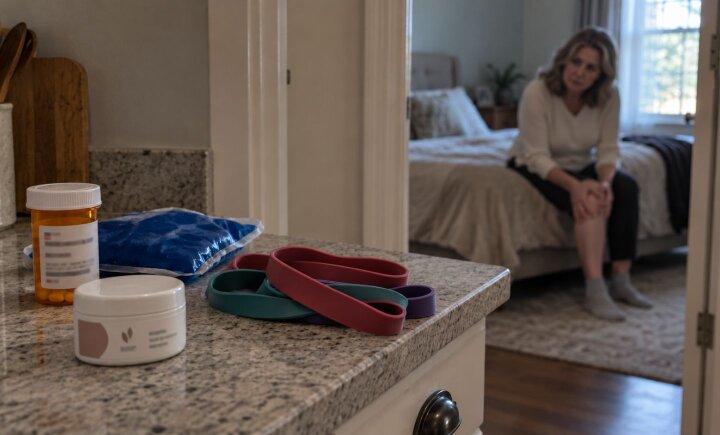
• Creams sometimes helped for a while. Sometimes they barely helped at all.
• Then came physical therapy. She went to the appointments, did the exercises at home, and kept at it for months. We kept telling ourselves she just needed to give it more time.
That frightened her for a different reason. This wasn’t another cream or brace. It meant surgery, recovery, rehab – and no way to know exactly how she would feel afterward.
Not to mention a hospital bill that would empty her retirement savings.
I remember thinking how backward the whole progression felt.
We had gone from creams and tablets to therapy, injections, and heavy braces…
And now we were talking about replacing the joint altogether.
Yet one simple problem was still there:
Why did her knee feel so unsupported every time she stood up and actually moved?
That was the question I started digging into.What I Found Changed How I Looked at Knee Pain
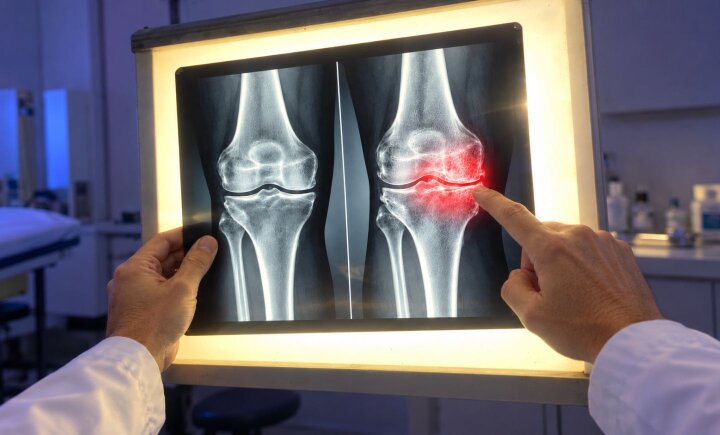
And the deeper I went, the less satisfied I was with the explanation we had been given.
Her knee was worn down, so of course it hurt. And that was basically the end of the discussion.
But it didn’t explain what I was noticing.
My mother could sit on the sofa without much trouble.
The fear came when she stood up. When she took that first step down the stairs. When she put her weight through the leg and didn’t know whether she could trust it.
And suddenly I couldn’t stop seeing the pattern.
Every moment she struggled with most happened when the knee actually had to do something – carry her weight, bend, stabilize, move.
That changed the question I was asking. I stopped asking only:
“Why does her knee hurt?”
And started asking:
“What is happening the moment she actually puts weight on it?”
What bothered me was how rarely anyone had talked to us about that.
After years of appointments, treatments, and products, everything seemed focused on the pain itself.
Almost nobody had explained what was happening during the movements that actually made her afraid to use the knee.
And the longer I looked, the harder it became to believe that something so basic had simply been overlooked. Especially in an industry worth billions.
Eventually, I found the missing piece.
And once I understood it, everything my mother had been going through started to make sense.The Real Root Cause Behind Knee Pain & Instability
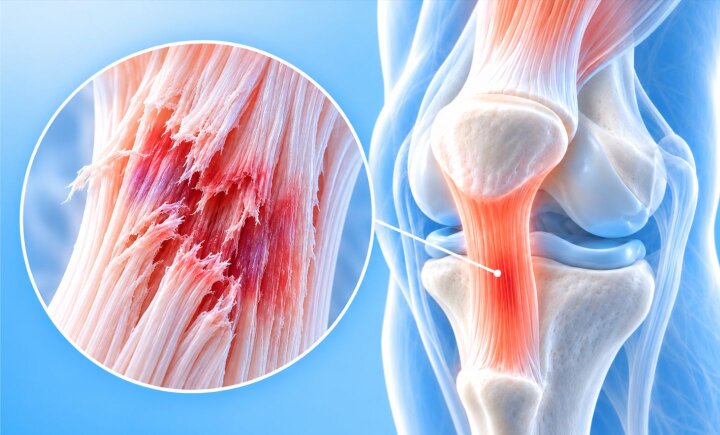
Directly beneath the kneecap.
That’s where the patellar tendon sits. Every time you stand up, walk, climb stairs, squat, or bend your knee, that area takes a huge amount of load.
If it’s already irritated, every step keeps stressing the same spot.
And then you start protecting the knee without even realizing it. You shift your weight. Push harder through the other leg. Grab the railing. Stand up differently. Shorten your stride.
Before long, the way you move starts changing around the pain.
That was the cycle I had been watching with my mother for years without understanding it.
The pain changed the way she moved, and the more she compensated, the less stable and trustworthy the knee felt.
That’s what led me to research on patellar straps.
Researchers studying straps worn directly beneath the kneecap found that they could reduce strain through the patellar tendon during movement.
As one study concluded:
“Infrapatellar straps may limit excessive patella tendon strain.”
In plain English?
Support the right spot, and you reduce the strain that spot has to deal with every time you move.
That was the missing piece.
We didn’t need more pressure around the whole knee.
We needed support exactly where the strain was happening.The Incredibly Simple Solution That Changed Everything
She walked down the stairs without grabbing the railing.
She didn’t stop halfway or carefully test each step before putting her weight down.
When she reached the bottom, she turned around, looked at me, and started crying. This time, they were happy tears.
That was when I knew we had found something different.
Instead of wrapping and squeezing the entire knee, I focused support directly beneath the kneecap – right over the patellar tendon.
It came down to three simple things:
Directly beneath the kneecap, where the strain builds every time you stand, walk, bend, or take the stairs.
Firm enough to support the area without getting in the way of natural movement.
So it stays where you need it when you’re standing up, walking, climbing stairs, or bending down.
For years, we had been trying to make my mother’s knee hurt less.
What she had been missing was physical support right where her knee needed it most.
Once I saw that, the solution felt almost embarrassingly simple.My Discovery Started Getting Noticed
A few weeks later, we had friends over for dinner. As everyone was leaving, one of her friends, Alice, pulled me aside.
“What did you do to her knee?”
She’d been struggling with hers for years, too. Stairs hurt. Getting up after sitting for a while was getting harder. On bad days, she’d catch herself reaching for walls or furniture because she didn’t trust the knee underneath her.
So I gave her another prototype and showed her exactly where to wear it.
The next morning, my phone rang.
Alice was crying. For a second, I thought something had gone wrong.
Then she said, “I can’t believe this is actually helping.”
She’d worn it that morning while getting dressed, walking downstairs, and moving around the house.
For the first time in a long time, she said her knee felt supported instead of like something she had to constantly protect.
Alice told someone. They told someone else.
Before long, I was making prototypes for people I’d never even met. And I kept hearing the same kinds of stories.
People were taking the stairs without dreading every step. Standing up without bracing themselves first. Walking farther without that familiar pain every time the knee came under strain.
They were gardening again. Staying on their feet longer. Getting down on the floor with their grandkids and actually trusting that they could get back up.
Again and again, people told me some version of the same thing:
“My knee finally feels supported when I move.”
That was when I realized this was much bigger than my mother.
And of course, something this simple – and this effective – wasn’t going to stay under the radar forever.
First came the warnings.
Then the threats.When You Start Messing With the Money-Printing Machine, They Come for You
Doctors were hearing the same question from patients who had tried the straps:
“Why didn’t anyone tell me about this?”
One orthopedic clinic called me furious. Several of their patients had started asking why they’d spent years cycling through pills, injections, therapy, and expensive braces without ever hearing about targeted support beneath the kneecap.
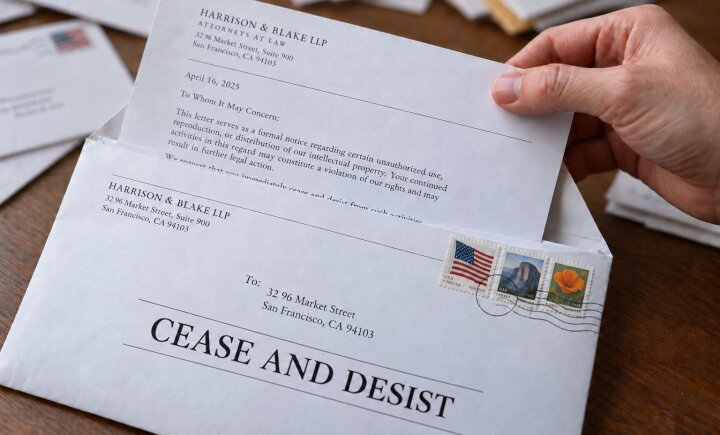
Then the legal letters started arriving.
One accused me of oversimplifying knee pain. Another demanded that I stop comparing the straps with conventional treatments. A third threatened further action if I kept making them available.
That’s when I understood what was really making people nervous.
Patients weren’t just trying the straps.
They were starting to question why they had spent so much money before anyone showed them something this simple.
And there’s a lot of money in keeping someone with chronic knee pain coming back.
A small reusable strap you can put on yourself doesn’t fit very comfortably into that cycle.
One medical-device distributor put it plainly:
“You’re making people question why they’re spending all this money. That’s going to make a lot of people nervous.”
By then, the threats only made me more determined.
I had seen what this approach had done for my mother, and I wasn’t going to bury it because it threatened someone else’s bottom line.
So instead of backing off, I found people who could help turn my rough prototype into something comfortable, durable, and practical enough to use every day.
That became Flexney Knee Straps.Introducing the Strap That Actually Targets Knee Pain at the Source
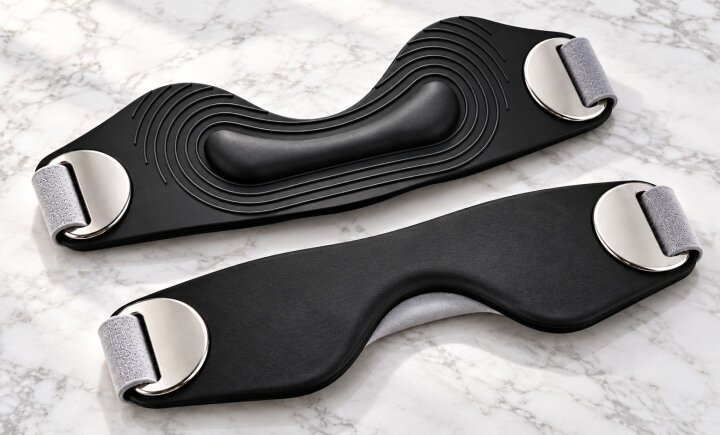
Instead of squeezing the entire knee, the shaped silicone support puts pressure right where the tendon takes strain during everyday movement.
The strap is made from breathable cloth, polyester, and Lycra, so it stays lightweight instead of trapping your knee inside a hot, bulky brace.
It’s adjustable, low-profile, and easy to wear discreetly under trousers or leggings.
And this wasn’t built for athletes trying to squeeze out another workout.
It was built for the everyday movements my mother had been struggling with – taking the stairs, standing up from a chair, walking, gardening, or simply spending more time on her feet.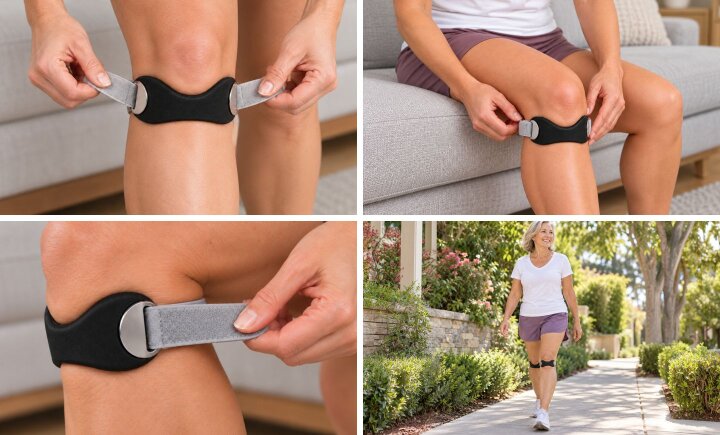
With your knee slightly bent, place the silicone support directly beneath your kneecap, centered over the patellar tendon between your kneecap and shin bone. It should sit below the kneecap – not on top of it.
Adjust the strap until the pressure feels firm and even. It should feel supportive, but never so tight that you experience numbness or tingling.
Stand up and walk around. If needed, make a small adjustment until the strap feels secure and the silicone support stays centered beneath your kneecap while you move.
Put it on whenever you need extra support during everyday movement, and the silicone pad stays focused on the exact area we had been looking for all along.People I’d Never Even Met Tried & Loved Flexney
Different ages. Different routines. Different knee problems.
But the messages kept coming back to the same thing – they were getting pieces of their normal lives back, thanks to Flexney.
“I used to walk around the neighborhood after dinner, but eventually I stopped because I was always worried my knee would start hurting halfway through and I’d have to turn back. The first time I wore Flexney, I finished my old route. Now I’m walking regularly again instead of constantly thinking about whether my knee is going to make me stop.”
“Gardening was one of the things I missed most. Kneeling bothered me, but standing back up was the worst part. I’d have to grab a chair or pull myself up against the side of the house. Eventually, I stopped bothering. The first afternoon I went back outside with Flexney, I ended up staying out there for hours. I hadn’t done that in months!”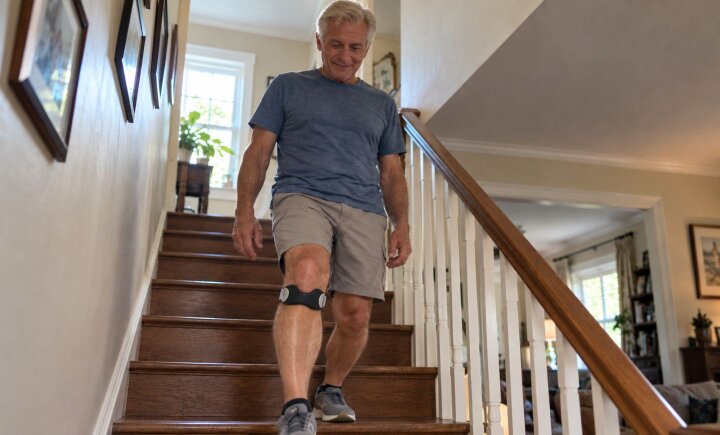
“For almost three years, I wouldn’t go downstairs without holding the railing. My right knee always felt like it might give out, especially going down. About a week after I started wearing Flexney, I got halfway down before I realized my hand wasn’t even on the rail!”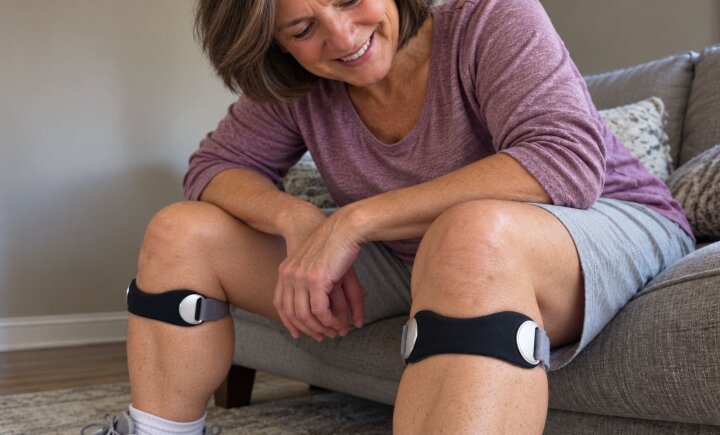
“I used to push myself out of every chair with both arms, then stand there for a second waiting for my knees to feel steady. It became such a habit I barely noticed I was doing it. Then I got Flexney. One afternoon I stood up from the sofa and walked into the kitchen, and only afterward realized I hadn’t done any of that.”
“I stopped sitting on the floor with my grandkids because getting back up had become such a struggle. A few weeks after I got Flexney, my granddaughter asked me to build something with her on the floor. I sat down without really thinking about it. We stayed there almost an hour, and when it was time to get up, I just got up. I can’t explain how good that felt.”What “Managing” Knee Pain Actually Costs
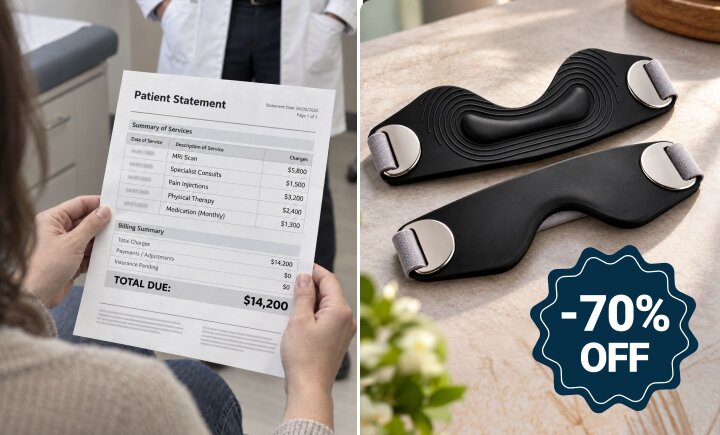
It rarely starts with one enormous bill.
It’s an orthopedist visit here. Another prescription there. A cortisone injection when things get worse. Then another appointment when the relief wears off.
At $200-$300 per orthopedist visit. $350-$600 a month for prescription medication. $1,500-$3,000 for a cortisone injection, those costs can turn into thousands of dollars surprisingly fast.
And that’s before the bigger-ticket options.
Specialist consultations. MRIs. More injections. More rounds of treatment.
Eventually, people like my mother may even find themselves discussing the most expensive option of all:
Knee replacement.
That can mean $35,000-$65,000 for the procedure, followed by recovery, rehabilitation, time away from work, and more medical care afterward.
And that was the part that really got to me.
My mother wasn’t asking to run marathons.
She wanted to walk down the stairs without gripping the railing. Stand up from a chair without bracing herself first. Take a walk without wondering halfway through whether her knee was going to make her turn around.
Yet somehow, getting back those ordinary parts of life had turned into something people could spend thousands upon thousands of dollars chasing.
Which made the price of a small, reusable knee strap look very different.So What Does Flexney Actually Cost?
The prototypes alone cost me far more than I ever expected.
But I didn’t build Flexney to become another expensive knee treatment. I built it because I wanted something my mother – and people like her – could actually afford to use.
The regular 2-pack of Flexney Knee Straps would normally cost $88.67.
Right now, you can get both for just $39.90 – only $19.95 per strap.
But if you’re already thinking, “I’m not the only one in my family dealing with bad knees…” there’s an even better deal.
The 5-pack normally costs $216.50.
You can get all five for just $64.95 total – only $12.99 per strap. That’s a full 70% DISCOUNT.
Keep a couple for yourself, have one ready for each knee, and give the extras to someone else in your life who could use the support.
Compared with what people can spend cycling through appointments, injections, medications, scans, and specialty braces, that’s a tiny fraction of the cost.
And there’s virtually no risk in trying it.
Every Flexney order is backed by a 30-day money-back guarantee. Try it during the everyday movements that normally give your knees trouble. If you’re not happy with it, you have 30 days to ask for your money back.
These discounted prices are tied to the current stock, so I can’t promise the 70% offer will still be available once this batch is gone.
For as little as $12.99 per strap, you can keep targeted knee support ready for yourself – and for anyone else in your life who could use it.How to Get the Real Flexney Knee Straps
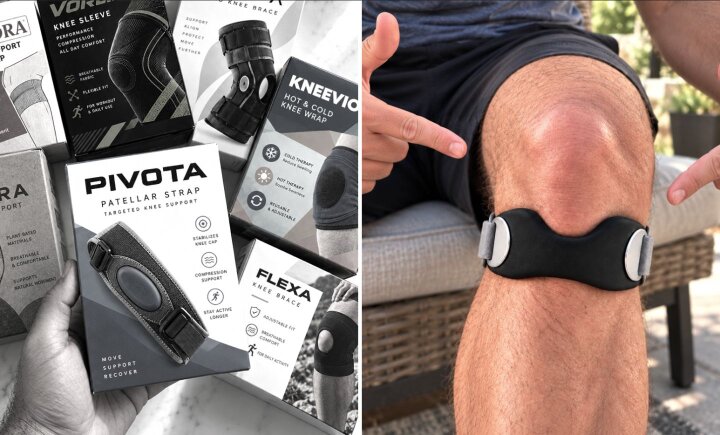
The real Flexney Knee Strap is only available through the official Flexney website.
You may see generic knee straps online that look similar in photos, but that doesn’t mean they use the same shaped silicone support, materials, fit, or construction.
So if you decide to try Flexney, make sure you’re actually getting Flexney – not a cheap lookalike.
Getting yours is simple:
Just position it beneath your kneecap and adjust it until the support feels firm and comfortable.
That’s it.
If Flexney is still available at the current discounted price, you can check your options below.There Are Two Ways You Can Go From Here
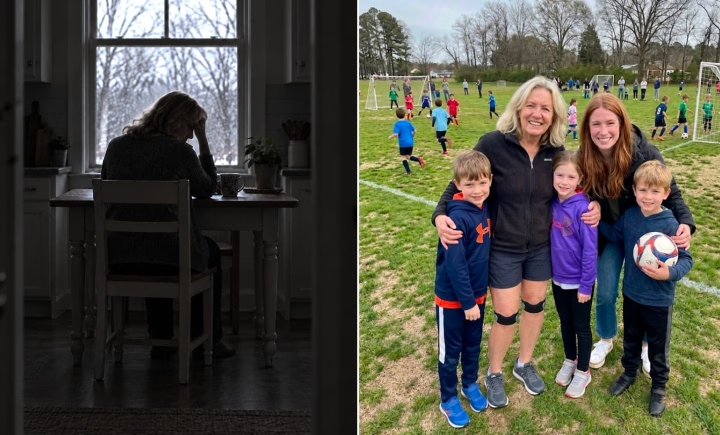
Path #1: Keep doing what you’re doing.
Keep reaching for painkillers when your knees flare up. Go back for another injection when the last one wears off. Keep making those little adjustments that slowly become part of everyday life.
You grab the railing. Cut the walk short. Push yourself out of the chair and wait for your knee to feel steady.
None of it seems dramatic on its own.
But over time, more and more of your day starts revolving around what your knees will let you do.
Path #2: Try something different.
Give your knee firm, targeted support beneath the kneecap and see what difference it makes when you move.
Maybe that means taking the stairs without automatically reaching for the railing. Standing up without bracing yourself first. Staying on your feet longer. Going for the walk you’ve been putting off.
Getting back to ordinary things that shouldn’t feel like such a big deal.
I created Flexney because I never wanted to watch my mother stand frozen on those stairs again.
If your knees have started making those same decisions for you, you can keep managing around them…
Or you can find out what happens when you finally support them in the right place.
Customer Ratings
Average based on 9.803 reviews
 Excellent


I’ve bought so many knee things over the years… Creams, sleeves, one of those big hinged braces... Flexney is the first one that actually helped me move without that ache…